
H.E.A.T.
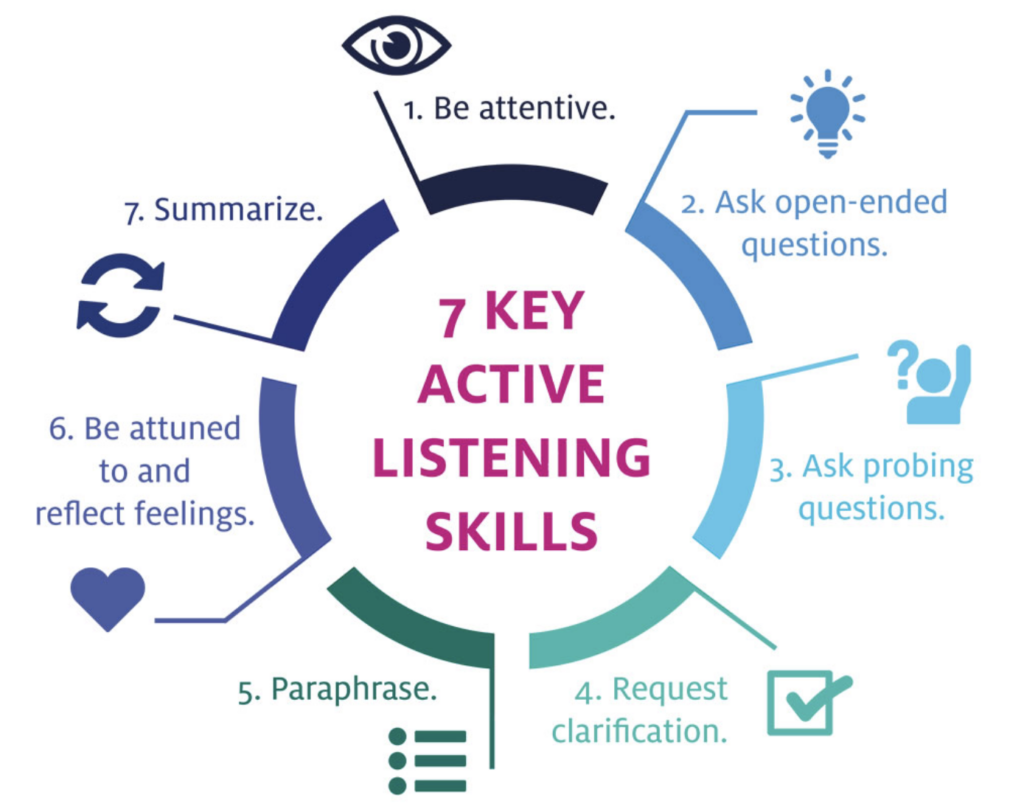
Hear by actively listen to the caller and understand the issue / concern
Empathize with on a human level; be genuine
Apologize for the problem or inconvenience (this is not the same as accepting blame or agreeing with what is stated)
Take responsibility for action by:
-
- Repeating and clarifying your understanding of the situation
- Offer options and recommendations on what you CAN do
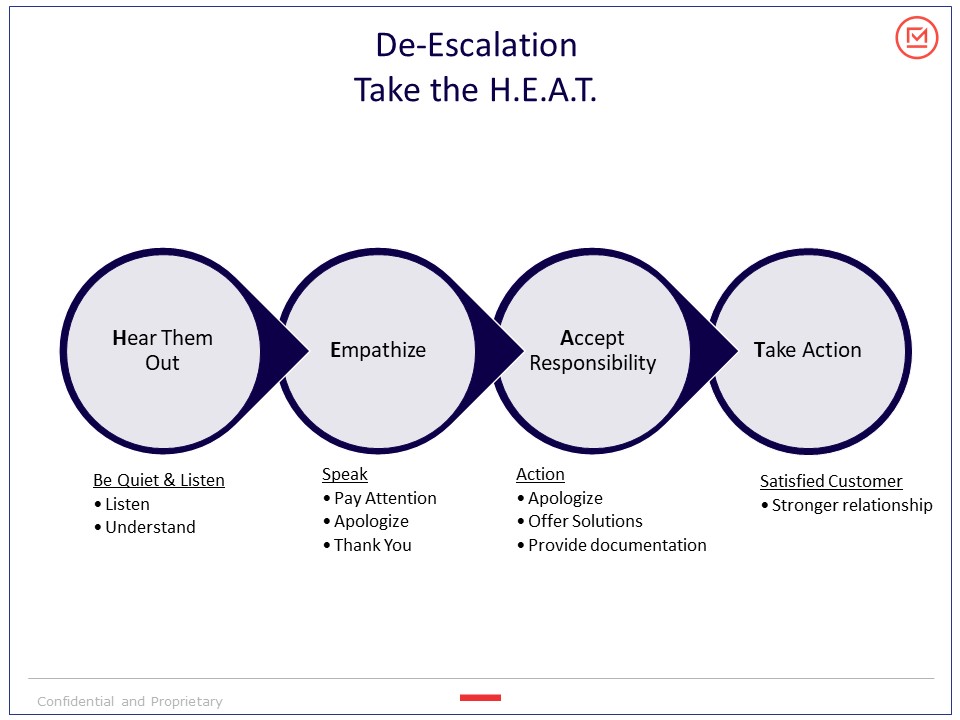
“H” stands for “HEAR
- This simply means that you give an ear to the customer’s issue
- Hearing the customer out and actively listening to the customer makes a tremendous difference
“E” is for “EMPATHIZE” or “ENGAGE” with the caller
- By expressing genuine empathy, you are letting the customer know you care
- Positive phrases and empathy statements for customer service:
- “Thank you for bringing this to our attention”
- “I completely understand how frustrating that must be”
- “I’m truly sorry to hear about your experience”
- “Great question, let me find out for you”
- “I really appreciate your patience”
- “Here’s what I’m going to do for you”
- “Thank you for your understanding”
- “I’d be happy to recommend…”
- “I can understand that must make you feel upset and we will work to fix this situation for you”
- “I can understand that times are very difficult; let’s see what we can do for you today to make it better”
“A” is for “ACCEPT RESPONSIBILITY”
- You are willing to apologize on behalf of the company you work for and you will do whatever is in your power to improve the situation
- Offer an apology even if the problem is not your fault; don’t blame someone else
- Often all the angry person wants is to hear the words, “I’m sorry”
- This is a great time to ask detailed questions to better understand the situation if necessary
- “I’m going to do everything I can to help. To do that, I need just a few more details, is that okay?”
- If they say no or continue complaining, go back to H and E
- If they say okay, proceed to ask whatever details you require
- “I’m going to do everything I can to help. To do that, I need just a few more details, is that okay?”
“T” is for “TAKING ACTION”
- Take action
- Do something to change the situation within your power
- Connect the customer with the right person
- Let the customer know you have done everything you could have done to make the situation better
- Once you’ve heard the person out, empathized with the situation, offered an apology, let your customer know what you will do about the situation and do it
- Even if your action is to take the issue to a supervisor / manager for resolution, act without delay and let the customer know how you are handling the problem